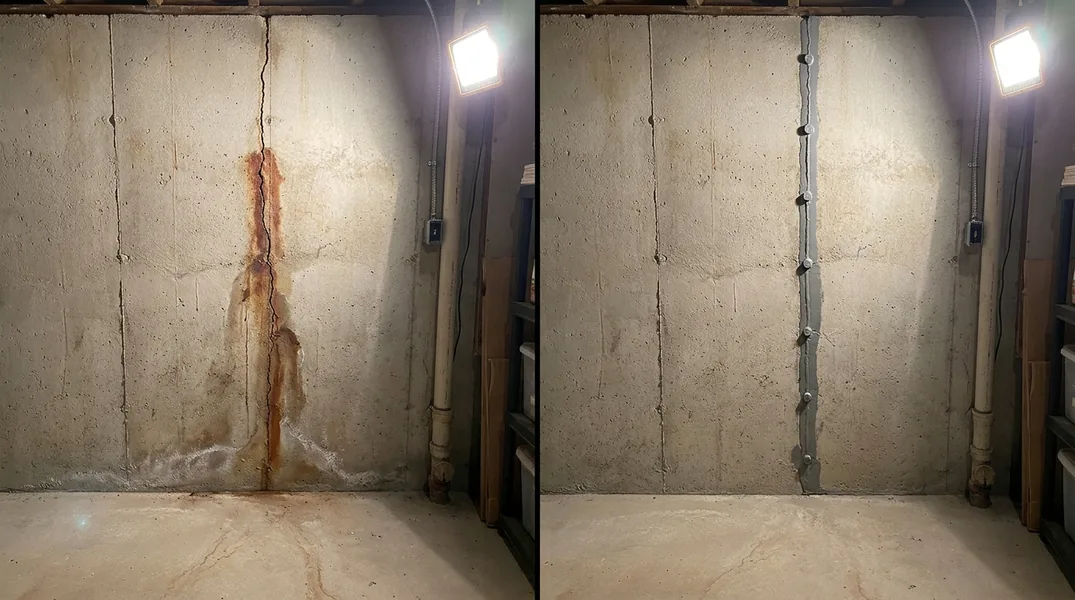
The Geology Under Your Home: Glacial Clay and Dolomite Bedrock
If you live in Elgin, the ground beneath your home has a story to tell, and it is a story that directly affects your basement. Thousands of years ago, retreating glaciers left behind thick deposits of clay soil across the Fox River Valley. Unlike sandy or gravelly soils that drain quickly, glacial clay is dense, sticky, and nearly impermeable. When it rains or snow melts, that clay holds water like a sponge, swelling and pushing against your foundation walls with tremendous force.
Below the clay lies another challenge: dolomite bedrock. This hard limestone-like rock sits at varying depths across the region, sometimes just a few feet below the surface. When water cannot drain through the clay above, it pools on top of the bedrock and finds the path of least resistance, which is often the joint where your foundation meets the soil. Understanding this geological combination is the first step toward understanding why Foundation Waterproofing in this area requires a tailored approach rather than a one-size-fits-all solution.
Why Elgin Foundation Cracks Keep Coming Back
The cycle of swelling and shrinking clay is the primary driver of Elgin foundation cracks. During wet seasons, the clay expands and exerts lateral pressure on basement walls. During dry summers, it contracts and pulls away from the foundation, leaving voids. Your foundation, which was poured or block-laid to sit on stable ground, ends up moving in two directions over the course of a year. Hairline cracks that appear in spring may widen by fall, and patching them without addressing the soil movement is a temporary fix at best.
Many homeowners in the area notice cracks reappearing in the same spots year after year. That pattern is a clear signal of ongoing foundation settling driven by Illinois soil movement. The crack itself is a symptom, not the disease. Effective repair means stabilizing the water content around the foundation and managing hydrostatic pressure, which is why a structural assessment should always come before any cosmetic crack filling.
Glacial Clay Soil Basement Leaks: How Water Finds a Way In
Glacial clay soil basement leaks are notoriously persistent because the water has nowhere to go. In sandy soil, groundwater percolates downward and away from the house. In clay, it saturates the soil and creates hydrostatic pressure against the foundation. That pressure forces water through even the smallest pores in concrete, through mortar joints in block walls, and through the cove joint where the floor meets the wall. If your basement smells musty after heavy rain, you are likely experiencing this exact phenomenon.
Roof runoff and poor grading make the problem worse. When downspouts discharge within a few feet of the foundation, they dump hundreds of gallons of water into already saturated clay. Over time, this water can also erode the soil beneath the footing, leading to differential settlement. A comprehensive solution typically involves both managing surface water and installing an Interior Drain Tile System to relieve pressure at the base of the wall, or Exterior Basement Waterproofing to intercept water before it reaches the foundation.
Foundation Settling in Elgin: Signs You Should Not Ignore
Not every crack means your home is in trouble, but certain signs point to active settling that deserves professional attention. Stair-step cracks in block walls, horizontal cracks that bow inward, doors that stick in their frames, and floors that feel uneven are all indicators that the soil beneath your home has shifted. In South Elgin and nearby communities, we see these patterns frequently in homes built on filled or graded lots where the original soil was disturbed during construction.
Ignoring these signs can lead to more than a damp basement. Ongoing movement can compromise the structural integrity of your foundation, and water intrusion accelerates deterioration of concrete and mortar. The good news is that early intervention is far less expensive than waiting for a wall to fail. A professional evaluation can distinguish between cosmetic shrinkage cracks and active movement, then recommend the right combination of drainage, sealing, and stabilization.
Basement Waterproofing Near Me: When to Call a Pro in Elgin
If you have tried patching cracks, extending downspouts, and regrading your yard, but water still finds its way in, it is time to call a professional. DIY fixes address surface symptoms, but they cannot relieve the hydrostatic pressure that builds up in glacial clay. A proper Basement Waterproofing strategy accounts for your specific soil conditions, the age of your foundation, and how water moves across your lot. This is especially true in older neighborhoods in St. Charles and Batavia, where original drainage systems may be decades old.
When you schedule a free estimate, a qualified contractor should inspect both the interior and exterior, check for signs of settling, and explain the pros and cons of interior versus exterior solutions. Ask about pricing transparency and warranty terms before committing. If you are unsure whether your issue is urgent, call Elgin Waterproofing at (224) 407-3329 for a straight answer. A short conversation can save you thousands in avoidable repairs later.
Protecting Your Home from Illinois Soil Movement Long Term
Once the immediate leak or crack is addressed, long-term protection comes down to managing water around your foundation. Keep gutters clean, extend downspouts at least six feet from the house, and maintain grading that slopes away from the foundation. In clay-heavy areas, consider a sump pump with battery backup to handle water that collects in the drain tile system during spring storms. These steps do not replace professional waterproofing, but they extend the life of any repair you invest in.
It is also worth scheduling periodic inspections, particularly after a season of extreme weather. Illinois soil movement is cyclical, and a system that performed well for five years can develop new stress points as soil conditions change. Homeowners who stay proactive spend less over time and avoid the disruption of emergency repairs. Whether you are in Elgin or a neighboring community, understanding the local geology is your best defense against foundation problems. Reach out to Elgin Waterproofing today to schedule an assessment and protect your home for the long haul.
Looking for a professional basement waterproofing contractor in Elgin? Elgin Waterproofing responds fast for all your basement waterproofing needs.
Get a Free QuoteOur services: Basement Waterproofing · Interior Drain Tile System · Exterior Basement Waterproofing