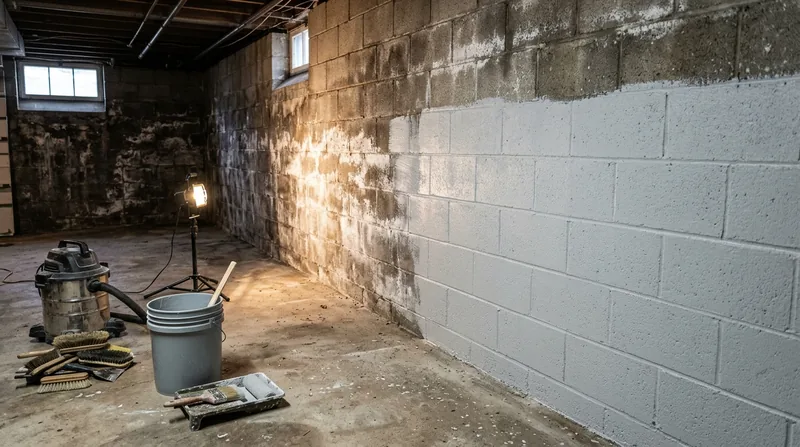




Elgin sits on glacial till and clay loam over dolomite, and that shallow, slow-draining soil is why so many basements here stay damp long after the rain stops. In Bluff City and the downtown streets, 1900s to 1930s brick and frame houses have stone, brick, or early block walls that wick groundwater and show efflorescence by March. Out west and north, 1950s and 1960s ranches and split-levels with partly finished basements seep at the cove joint. Newer subdivisions in South Elgin and Hanover Park have poured walls, but the clay still holds snowmelt against the footing. Basement Wall Sealing in Elgin starts with an honest question: is this minor dampness, or is hydrostatic pressure pushing water through the wall? We answer that before we sell you a sealer. Call (224) 407-3329 to book a free basement inspection, and read our basement waterproofing service page for the full picture.
Why Basement Wall Sealing Matters in Elgin's Clay and Freeze-Thaw Cycle
Elgin's long winters and fast spring snowmelt push the water table up against older block and stone walls. Freeze-thaw cycles open hairline cracks, and each thaw lets water seep in at the mortar joints. Sealing the wall face slows that surface dampness, but it cannot hold back a saturated clay bank pressing on the wall.
- Efflorescence (the white salt bloom) tells you water is moving through the masonry, not just condensing on it.
- Damp patches high on the wall usually point to grading or downspout extension problems, not a failed sealer.
- Water at the cove joint after heavy rain is a sign of hydrostatic pressure and often calls for an interior perimeter drain.
- Musty basement smell in a finished 1960s ranch usually means moisture is trapped behind paneling or drywall.
We tell Elgin homeowners plainly when a sealer is the right fix and when the wall needs drainage instead.
Key info: A 1920s brick wall on Channing Street that shows white bloom but no running water is a sealer job. The same wall with water puddling at the base after every Fox River rain event is a drainage job, and sealing it alone would trap moisture in the block.
For permit questions on structural or drainage work, verify current requirements with the City of Elgin building department before work begins.
How We Seal Basement Walls in Elgin, Step by Step
We start by finding the source, not by rolling on product. A moisture meter and a visual walk of the wall show whether the dampness is surface condensation, capillary pull through the masonry, or active seepage under pressure. From there we prep the wall, remove efflorescence, and choose a penetrating sealer or a membrane based on the wall material and the actual moisture reading.
- We inspect the wall, the cove joint, and the grading outside to identify the water path.
- We remove efflorescence and loose parging so the sealer bonds to sound masonry.
- We fill non-structural cracks with the appropriate crack filler before sealing the face.
- We apply a penetrating sealer on brick or block, or a membrane sealer where the wall needs a film.
- We correct grading and downspout extension so roof water moves away from the footing.
- We leave you a written note on what we found and what to watch for next spring.
If the inspection shows pressure, we explain the alternative before you spend money on a sealer that will not solve it.
Key info: On a split-level in Carpentersville, the damp wall traced back to a downspout dumping at the corner. Extending the discharge and sealing the block wall solved it. On a 1990s walkout in South Elgin, the same symptom was a failed footing drain, and we routed the homeowner to interior drain tile instead.
Sealing Approaches We Use on Elgin Basement Walls
Not every wall takes the same product. Stone, brick, early block, and poured concrete behave differently, and a membrane that works on a poured wall can trap moisture in an old brick wall. This table shows how we match the approach to the wall and the water problem.
| Approach | Description | Best for |
|---|---|---|
| Penetrating sealer | Soaks into block or brick and blocks capillary pull without a surface film. | Minor dampness and efflorescence on older masonry walls. |
| Membrane sealer | Forms a flexible coating that bridges hairline cracks and resists surface water. | Poured concrete walls with fine shrinkage cracks. |
| Crack injection first | Epoxy or polyurethane injection closes active cracks before any sealer goes on. | Walls with a clear, leaking vertical or diagonal crack. |
| Drainage instead of sealer | Interior perimeter drain and sump basin relieve pressure the sealer cannot stop. | Water at the cove joint and hydrostatic pressure in clay soil. |
We recommend the least invasive approach that actually stops the water, and we say so when sealing is not enough.
Basement Wall Sealing Cost in Elgin: What to Expect
Sealing a basement wall in Elgin starts from $1,500 for a typical single-wall or partial-perimeter job with prep, efflorescence removal, and a quality sealer. The number moves with wall length and height, how much prep the masonry needs, whether cracks require injection first, and access in tight 1920s downtown lots. Getting two or three estimates is smart because the diagnosis matters more than the price.
- Wall length and height drive the material and labor total more than any other factor.
- Heavy efflorescence or failing parging adds prep time before sealing can start.
- Active cracks that need epoxy or polyurethane injection add a separate line item.
- Old stone and brick walls sometimes need repointing before a sealer will hold.
See our full pricing overview for the detailed breakdown, and call (224) 407-3329 for a free inspection that confirms which scope you actually need.
Choosing a Basement Wall Sealing Contractor Near Elgin
Ask three things before you hire anyone near Elgin: are they licensed and insured, will they put the diagnosis in writing, and can they show recent local references. A contractor who promises a sealer will stop hydrostatic pressure is selling you the wrong fix. Ask whether permits apply to your scope, because structural repair and drainage changes can require them, and verify with the City of Elgin building department.
- Confirm licensed and insured status and ask for a certificate before work starts.
- Get two or three written estimates that describe the same scope so you can compare fairly.
- Check references from Elgin, South Elgin, or St. Charles homes with walls like yours.
- Ask who pulls any required permit and whether the work alters the sump discharge connection.
Reach out through our contact page and we will walk the wall with you before you commit to anything.
Basement Wall Sealing in Elgin: Pricing Guide
| Service | Price | Details |
|---|---|---|
| Single wall, penetrating sealer | Starting at $1,500 | Includes prep, efflorescence removal, and sealer on one typical basement wall. |
| Full perimeter, membrane sealer | Starting at $2,800 | Covers all four walls with flexible membrane; wall height and prep move the price. |
| Crack injection plus sealing | Starting at $2,200 | Epoxy or polyurethane injection on active cracks before the wall face is sealed. |
| Old stone or brick repointing | On estimate | Failing mortar needs an on-site look before we quote prep and sealing. |
| Travel | Included | In Elgin and surrounding Fox Valley towns, no separate call-out or mileage fee. |
| Estimate | Free | Response within 24 hours at (224) 407-3329, no obligation to book. |
Indicative pricing, the exact cost depends on square footage, finish, and site access. Free personalized estimate within 24h at (224) 407-3329.


