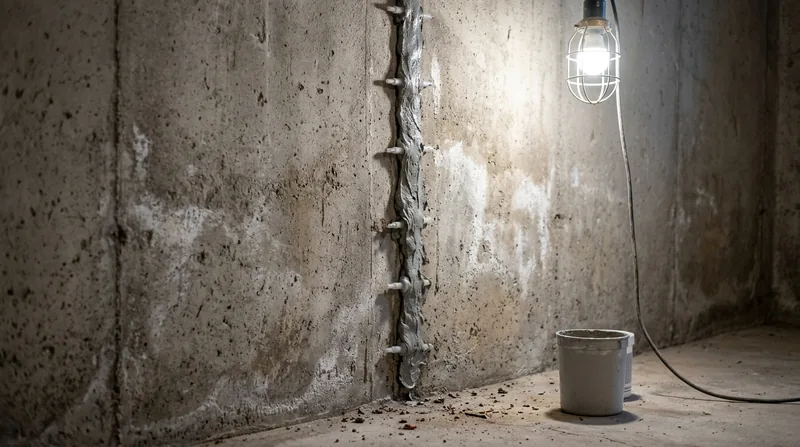




If you own a house in Elgin, you already know what spring does to the ground. The Foundation Crack Repair in Elgin work we handle every week starts with the same story: glacial clay soil, a long freeze-thaw cycle, and a wall that finally lets water through. Bluff City and the downtown streets are full of 1900s-1930s brick and frame houses with stone, brick, or early block foundations. Out west and north, the 1950s-1960s ranches and split-levels sit on partly finished basements. South Elgin, Hanover Park, and the western Fox Valley subdivisions have poured concrete walls from the 1990s to 2010s. All of them share the same clay loam over dolomite bedrock, which drains slowly and saturates every March and April. When the Fox River floodplain and the creeks that feed it rise after heavy rain, hydrostatic pressure finds the weakest joint in the wall. That is where a crack becomes a wet basement, and that is where we start. See how this fits into the full foundation waterproofing picture before you decide on a repair.
Why Foundation Cracks Open Fast in Elgin's Clay and Frost
Elgin sits on ground that holds water instead of shedding it. Glacial till and clay loam over dolomite mean snowmelt and spring rain have nowhere to go quickly, so the soil around your footing stays saturated for weeks. Add a northern Illinois freeze-thaw cycle that pumps the wall open and shut each winter, and the hairline crack you ignored in October is a weeping seam by April. Older block walls in the downtown and Bluff City neighborhoods are the most vulnerable because mortar joints crack before the block itself does.
- Spring snowmelt and heavy rain push the water table up against the footing and load the wall with hydrostatic pressure.
- Freeze-thaw cycles open existing hairline cracks in block and poured walls a little wider every winter.
- Downspouts that dump next to the foundation and grading that slopes back toward the house feed the same crack all year.
- Efflorescence, the white chalky stain on the wall, tells you water is already moving through the concrete or mortar.
None of these are cosmetic problems. Each one tells you the wall is being worked on from the outside, and that is the condition a crack repair has to survive.
Key info: A 1958 split-level off Summit Street in Elgin had a horizontal crack at mid-wall that wept every March. The cause was saturated clay pushing on a wall that had no exterior drainage. Sealing the crack alone would have failed by the next spring, so the fix paired injection with an interior perimeter drain. That is the honest call we make on older west-side homes.
If you want an official reference on how local permits and inspections are handled before structural work begins, start with the City of Elgin building department pages. Rules vary by jurisdiction and must be verified for your address.
How We Diagnose and Repair a Foundation Crack in Elgin
Every crack gets looked at before it gets a price. We walk the basement, map the crack direction, check for efflorescence and rust stains, and test whether the wall is moving or just leaking. A vertical crack in a poured wall is usually a shrinkage crack and takes injection well. A horizontal crack or a stair-step crack in block is often a sign of soil pressure and needs a structural answer, not just a sealer. We match the method to the crack, not the other way around.
- We inspect the crack inside and out, note the width, direction, and whether water is actively moving through it.
- We check the grading, downspout discharge, and footing drain condition to see if water is being fed to the wall.
- We drill and set injection ports along the crack at the spacing the width and depth require.
- We inject epoxy for structural cracks or polyurethane for active leaks, then let it cure and trim the ports flush.
- We test the repair with water where the crack was active and confirm the wall is dry before we leave.
When the crack is wide, shifting, or paired with a bowing wall, we move to carbon fiber straps or wall anchors and explain why injection alone will not hold. You can read more about that path on our bowing wall repair page.
Key info: A 2004 poured-wall home in South Elgin had a vertical crack under the basement window that leaked only during heavy rain. Polyurethane injection closed it in one visit. A 1928 brick foundation near downtown Elgin had a stair-step crack with active seepage and soft mortar. That one needed repointing and injection together, because sealing a moving wall is a waste of money.
Foundation Crack Repair Methods We Use in Elgin
There is no single patch that fits every wall in this city. The table below shows what we use and when, based on the wall material and the crack behavior we see on site.
| Approach | Description | Best for |
|---|---|---|
| Epoxy injection | Structural resin injected into a dry, stable crack to bond the concrete back together. | Non-structural vertical shrinkage cracks in poured walls. |
| Polyurethane injection | Flexible foam resin that expands and seals an actively leaking crack. | Wet, seeping cracks and hairline leaks after rain. |
| Carbon fiber straps | Straps anchored to the wall to resist inward movement from soil pressure. | Bowing block walls with horizontal or stair-step cracks. |
| Wall anchors | Exterior anchors tied through the wall to pull a moving wall back toward plumb. | Walls that have moved and need mechanical correction. |
| Parging and sealing | Surface repair of spalled mortar and minor seepage points before injection. | Older brick and block walls with surface deterioration. |
We choose the method after the inspection, never before, because a flexible foam in a structural crack or an epoxy in a wet one both fail for the same reason: the wrong material for the condition.
Foundation Crack Repair Cost in Elgin: What to Expect
Most single-crack injections in Elgin start at $450, and that figure covers the inspection, port setup, injection, and cleanup for a standard vertical crack. The price moves up with crack length, wall material, and access. A block wall with multiple stair-step cracks costs more than a single poured-wall seam. A crack that turns out to be a symptom of hydrostatic pressure needs drainage work too, and we tell you that before you commit to anything.
- Crack length and width drive the amount of resin and the number of injection ports required.
- Wall material matters: older brick and stone foundations take more prep than poured concrete.
- Active water or a saturated wall may require polyurethane instead of epoxy and a longer visit.
- Structural movement, bowing, or a failed footing drain can add carbon fiber, anchors, or drainage to the scope.
Get two or three estimates and ask each contractor which method they plan to use and why. A quote that names the method and the crack type is a real quote. A flat number with no inspection is a guess. Our full pricing overview breaks down how each scope is built.
Choosing a Foundation Crack Repair Contractor Near Me in Elgin
You want a contractor who inspects before quoting, explains the difference between a leaking crack and a moving wall, and puts the method in writing. Ask for proof of licensing and insurance, and ask for references from jobs in Elgin or the surrounding Fox Valley towns, not from out of state. A specialist who works below grade every day will spot a bowing wall or a failed drain tile that a general handyman will miss.
A few things to check before you sign:
- Confirm the contractor is licensed and insured, and ask for a certificate of insurance before work starts.
- Get two or three written estimates that name the repair method, not just a price.
- Ask for local references and look at photos of completed crack injections.
- Ask who pulls the permit if the work is structural, since rules vary by jurisdiction and must be verified with the local building department.
- Read the warranty terms and confirm they are transferable if you sell the house.
If a contractor will not inspect the wall or will not explain the method, keep looking. You can contact us to schedule a free basement inspection and get a straight answer on what your crack actually needs.
Foundation Crack Repair in Elgin: Pricing Guide
| Service | Price | Details |
|---|---|---|
| Single crack injection (poured wall) | Starting at $450 | Covers inspection, port setup, epoxy or polyurethane injection, and cleanup for a standard vertical crack |
| Multiple or long cracks | Starting at $750 | Priced by total crack length and port count, common on older block walls in Elgin |
| Structural repair with carbon fiber or anchors | On estimate | Needs an on-site look to confirm wall movement, crack pattern, and soil pressure before quoting |
| Crack repair plus drainage correction | On estimate | When hydrostatic pressure is feeding the crack, the fix includes interior drain tile or grading work |
| Travel | Included | In Elgin and surrounding areas, no separate call-out or mileage fee |
| Estimate | Free | Response within 24h at (224) 407-3329, no obligation to book |
Indicative pricing, the exact cost depends on square footage, finish, and site access. Free personalized estimate within 24h at (224) 407-3329.


